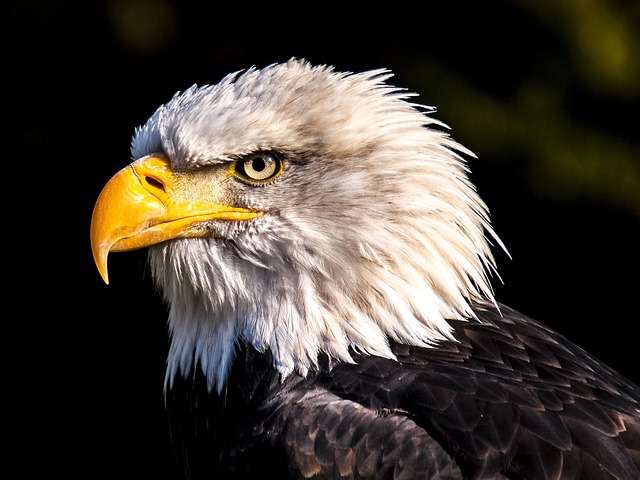
Eagles are among the largest and most powerful birds of prey, with about 60 species worldwide. Here are some of the best-known types.
Sea and fish eagles
Sea and fish eagles are large eagles that live near water and feed heavily on fish. The bald eagle is North America's famous fish eagle, easily known by its white head and tail; read more in bald eagle facts. The white-tailed eagle and Steller's sea eagle are large relatives found across Europe and Asia. These birds often snatch fish from the surface or steal catches from other birds. They are among the most recognizable birds of prey.
Booted and forest eagles
Booted eagles have feathers running all the way down their legs. The golden eagle is a powerful booted eagle of open country that hunts mammals such as rabbits and hares. The harpy eagle is a massive rainforest hunter of Central and South America, taking monkeys and sloths from the treetops. Other members include the martial eagle of Africa and various hawk-eagles. To learn what all these birds eat, see the eagle diet.
Eagles around the world
Eagles are found across much of the globe, with around sixty species in total. Most of them live in Africa and Asia, where the greatest variety is found. North America, by contrast, has only two native eagles: the bald eagle and the golden eagle. Central and South America have their own giant, the powerful harpy eagle, which rules the rainforest canopy and takes prey as large as monkeys and sloths. This spread across continents shows just how adaptable eagles are. To see how long they live, read how long eagles live.
Eagles under threat
Not every eagle is thriving. Several species are endangered, and one of the most at risk is the critically endangered Philippine eagle, one of the largest eagles in the world. The main pressures are familiar ones:
- Habitat loss as forests are cleared.
- Hunting and persecution.
- Poisoning, often unintended.
The hopeful news is that conservation work is bringing some eagles back from the brink. For more on one famous species, see our bald eagle facts.