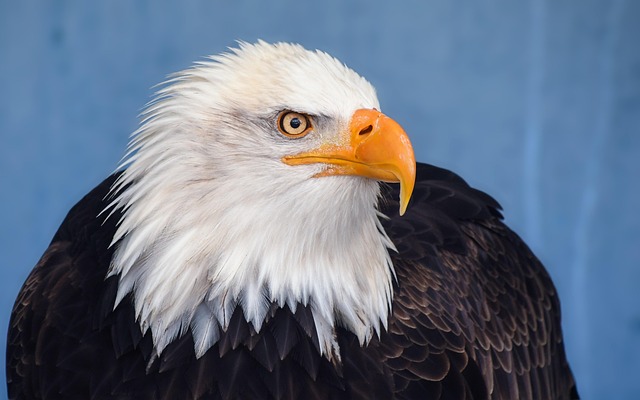
The bald eagle is the national bird of the United States and one of its greatest conservation success stories. Here are some fascinating facts.
Appearance and identity
Despite its name, the bald eagle is not bald; the word comes from an old term meaning white-headed. Adults have a striking white head and tail against a dark brown body, but they only develop this look at around four or five years old. Young birds are mostly mottled brown. With a wingspan that can reach around 7 feet, it is one of North America's largest birds of prey. It became the national emblem of the United States in 1782.
Nests, diet and comeback
Bald eagles build some of the largest nests of any bird, reused and added to over years until they can weigh a ton. They feed mainly on fish but also take waterfowl and carrion, as covered in what eagles eat. By the mid-1900s the species had declined sharply due to hunting and the pesticide DDT. After protection and a DDT ban, the bald eagle recovered strongly and is now a familiar sight again across much of North America.
Surprising bald eagle behaviour
For such a proud national symbol, the bald eagle has some cheeky habits. Rather than always catching its own fish, it often steals from ospreys, harassing them until they drop their catch. Bald eagles are also record-breaking nest builders, constructing the largest tree nests of any bird, some more than 2 metres wide and weighing as much as a tonne. And there is a romantic side too: pairs typically mate for life, returning to the same nest year after year and adding to it each season. Our types of eagles page sets these habits alongside other eagles.
The bald eagle and America
The bald eagle was chosen as the national emblem of the United States in 1782, and it has stood for the country ever since. Its name can be misleading, though. The 'bald' comes from an old word, 'balde', meaning white, a nod to the eagle's gleaming white head rather than any lack of feathers. It is a strikingly large bird in the flesh, with a wingspan reaching about 2 metres, or roughly 6 to 7 feet. Seen soaring overhead, it is easy to understand why a young nation reached for this eagle as its symbol. Our page on what eagles eat has more.