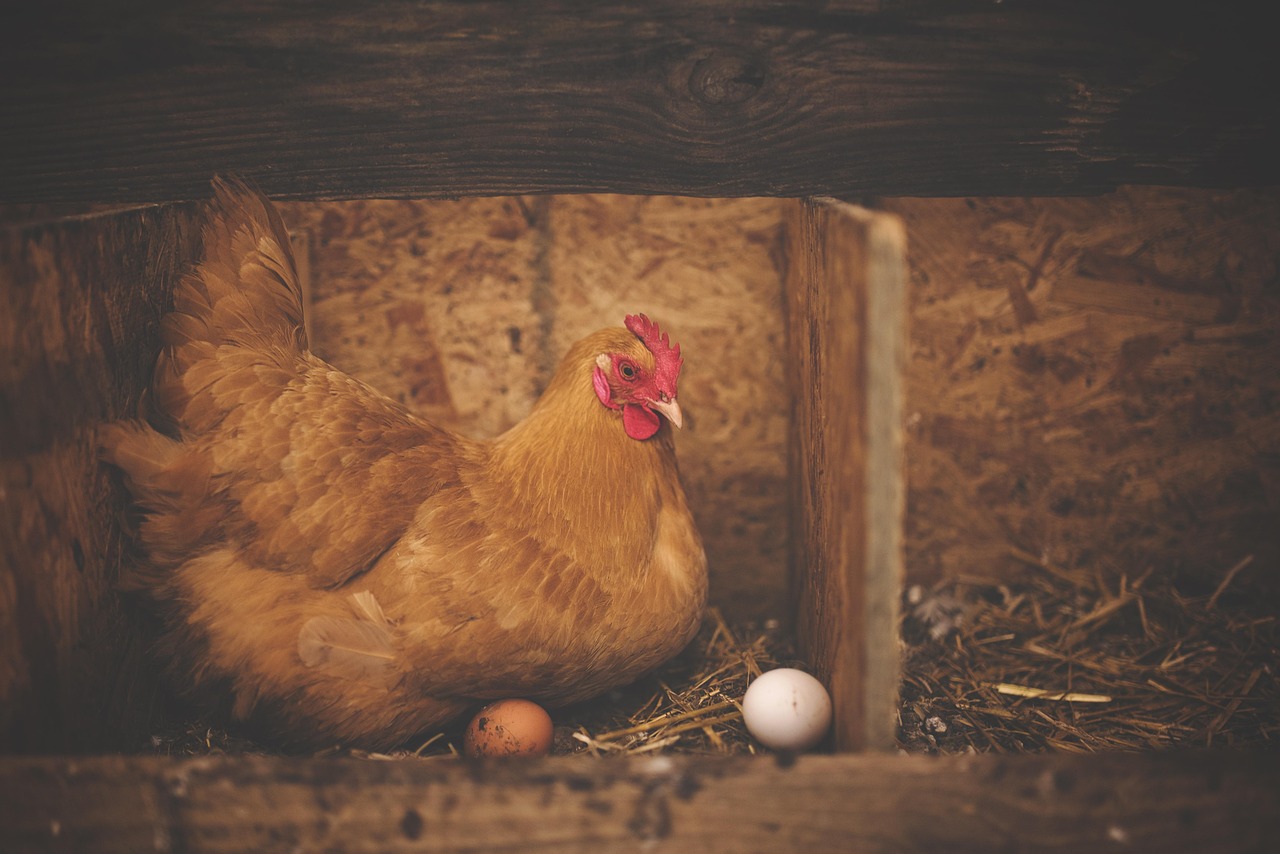
New keepers often watch the nest boxes for weeks, wondering when that first egg will finally appear.
The usual timing
Most hens begin laying at around 18 to 22 weeks of age — somewhere between four and a half and six months old. It is not an exact switch, and there is natural variation from bird to bird.
- Hybrids and lighter breeds may start a little earlier, around 16 to 18 weeks.
- Heavier and heritage breeds often take longer, sometimes 24 to 28 weeks or more.
If you are choosing birds partly for early eggs, the beginner breeds guide notes which types are quick, reliable layers.
Signs a hen is nearly ready
You do not have to guess blindly — a pullet gives clear hints as she approaches point of lay:
- Her comb and wattles redden and grow larger and brighter.
- She starts squatting — crouching down with wings slightly out — when you reach towards her.
- She begins exploring the nest boxes, scratching about and sitting in them as if trying them for size.
Once you notice these together, the first egg is usually only days or a couple of weeks away.
Why daylight matters
Laying is driven strongly by day length. A hen reaching maturity in spring or summer, with long days, tends to get going right on schedule. But a pullet that matures in late autumn, as the days shorten, may hold off and not lay properly until the following spring. This is completely normal and not a sign that anything is wrong — she is simply responding to the seasons, as chickens have always done.
What the first eggs look like
Do not expect perfection at first. Early eggs are often small, oddly shaped, thin-shelled or a bit irregular, and a hen may lay a few days apart before finding her rhythm. Some pullets even lay a tiny yolkless "fairy egg" or two at the start. Within a few weeks the eggs usually settle into a consistent size and shape. For how often to expect them once she is established, see how many eggs chickens lay, part of our full chicken-keeping guide.
Getting the nest boxes ready
A hen coming into lay needs somewhere she wants to use, or you will find eggs dropped on the floor of the run. Set up nest boxes before the first egg is due:
- Provide roughly one box for every three to four hens — they happily share.
- Place them in a quiet, dim, low corner of the coop where a hen feels safe and private.
- Fill each with clean bedding such as straw or wood shavings, topped up as needed.
A fake or ceramic egg left in a box can gently encourage hens to lay there rather than in odd corners. Have all of this ready a couple of weeks ahead, so the boxes feel familiar by the time she needs them. For the wider setup, see our chicken-keeping guide.