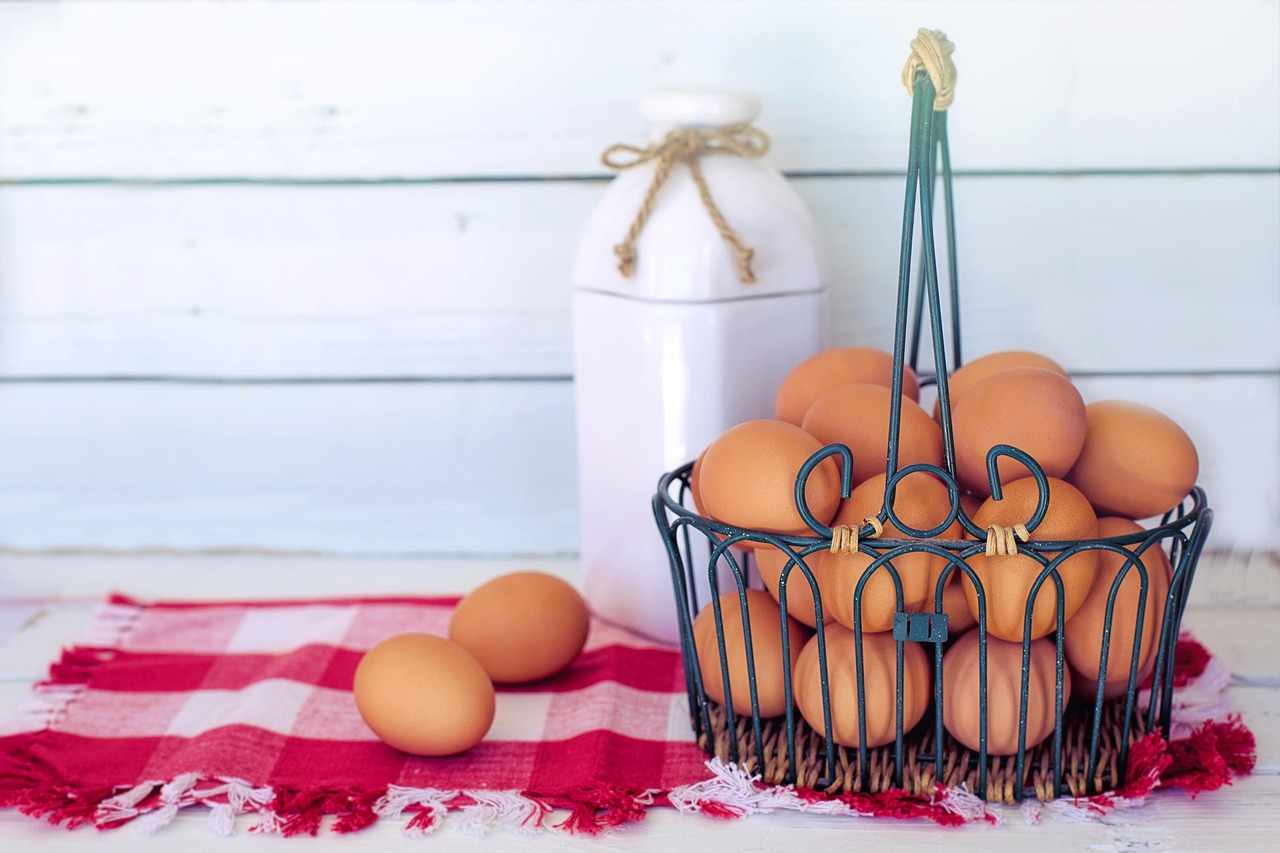
It is one of the first things people want to know, and the honest answer comes with a natural ceiling.
One egg a day is the ceiling
No matter how well you feed or care for a hen, she cannot lay more than about one egg per day. This is simply biology: forming a complete egg, shell and all, takes her body roughly 24 to 26 hours. Because each egg takes a little over a day, a hen actually shifts her laying time slightly later and later, until she skips a day and starts again. So a single hen producing two eggs in a day is a myth.
What good layers produce
At their peak, the best layers are remarkably productive:
- Hybrid layers such as ISA Browns, and breeds like the Leghorn, commonly lay around 5 to 6 eggs a week.
- Over a year that adds up to roughly 250 to 300 or more eggs in a strong bird.
Heritage and heavier breeds usually lay fewer, but often for more years. If you are choosing birds mainly for eggs, the beginner breeds guide flags the most reliable layers.
Why the count goes up and down
Several things pull egg numbers around through the year:
- Daylight — laying slows when days drop below roughly 14 hours, so most hens lay less in winter.
- The annual moult — hens pause or slow laying while they regrow feathers, often in autumn.
- Age — production is highest in the first two to three years, then drops noticeably even though the hen may live for many more years.
- Breed, nutrition, stress and health — all nudge the number up or down day to day.
Getting the most from your hens
You cannot beat biology, but you can help a hen reach her natural best. Feed a proper layer ration with calcium on the side, keep fresh water available at all times, and reduce stress from overcrowding, predators or frequent disturbance. During the moult and the depths of winter, ease off your expectations rather than pushing the birds — a rest is natural and does them good. For the fuller picture on feeding for laying, see what chickens eat.
Egg colour and size depend on breed
The colour of an eggshell is set almost entirely by breed, not by what a hen eats. Brown, white, blue, green and speckled eggs all look different on the outside but are exactly the same inside — the shell colour makes no difference to taste or nutrition.
- Leghorns lay classic white eggs.
- Rhode Island Reds lay brown eggs.
- Araucanas and Easter Eggers lay blue or green eggs.
Egg size is a matter of age as much as breed: a hen's first eggs are small and grow larger as she matures. Diet will not change the shell colour, though it does affect how deep-yellow the yolk is and how strong the shell forms. If a particular egg colour appeals to you, choose accordingly in the beginner breeds guide.