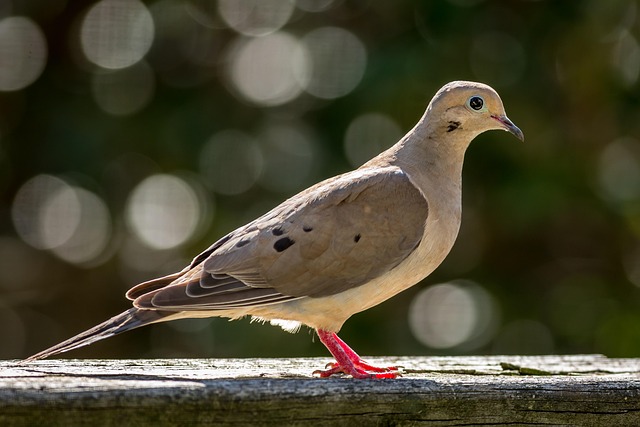
Mourning doves are gentle, soft-cooing birds and among the most common in North America. Their diet is remarkably simple: they are seed specialists.
An almost all-seed diet
Mourning doves eat seeds almost exclusively — grass and weed seeds, grains, millet, sunflower and cracked corn make up the vast majority of their diet. Unlike many birds, they eat very few insects. They quickly swallow seeds into a crop and digest them later, often while resting somewhere safe.
How mourning doves feed
Doves are ground feeders. You will see them walking and pecking beneath feeders, cleaning up fallen seed, rather than perching on a hanging feeder. They often feed in pairs or small groups and are calm, unhurried visitors.
How to attract mourning doves
Because they feed on the ground, scatter seed on a ground or low platform feeder — millet, cracked corn and black-oil sunflower are all popular. A source of water and some open space where they can watch for predators will keep them coming back.
What baby mourning doves eat
Newly hatched mourning doves do not start life on seeds. Instead, both parents feed their chicks a rich fluid called 'crop milk', which is produced in the crop, a pouch in the throat. This nourishing liquid gives the young the protein and fat they need in their earliest days. As the chicks grow, the parents gradually mix in softened seeds, weaning them onto the seed-based diet that adults rely on. It is a lovely example of how well doves care for their young, and one reason a pair can raise several broods in a single season.
Why they swallow grit
Mourning doves have an unusual way of eating. Rather than crushing seeds in their beaks, they gulp them down whole, storing them in the crop. To break the seeds up, doves also swallow small pieces of grit and sand. This grit collects in the gizzard, a muscular part of the stomach, where it grinds the seeds much like a mill. It is why you may see doves pecking at bare ground or gravel paths, not for food, but for the tiny stones that help them digest. Their diet is roughly 99% seeds, with white millet, cracked corn and sunflower among their firm favourites, taken from the ground or a platform. See our wild birds page for more garden visitors.