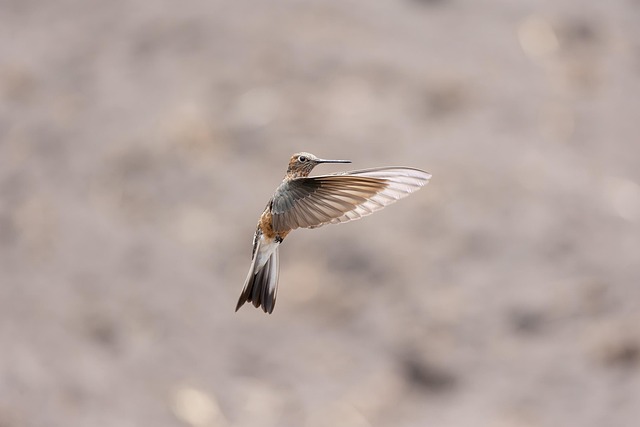
Hummingbirds are among the most agile fliers in the world, capable of hovering, flying backward and diving at high speed. Their tiny wings work incredibly hard to make it happen.
Flight speed
In normal level flight, a hummingbird typically travels around 25 to 30 miles per hour, which is fast for such a small bird. During courtship, males perform steep power dives and can reach much higher speeds, with some estimates for diving birds well above 40 miles per hour. They are also uniquely manoeuvrable, able to hover in place, fly straight up and down, and even fly backward, something almost no other birds can do.
Wingbeats
The secret to this flight is an astonishing wingbeat. Many hummingbirds beat their wings roughly 50 times per second in normal flight, and some smaller species beat even faster, which produces the humming sound that gives them their name. Their wings move in a figure-eight pattern that generates lift on both the forward and backward stroke, allowing them to hover. All that effort demands constant fuel, which is why they eat so often. See what hummingbirds eat.
Dives and agility
Courtship dives are the showiest displays. A male climbs high, then plunges toward a female or rival before pulling up sharply, sometimes making a loud sound with his tail feathers at the bottom. These dives put enormous forces on the bird, yet it handles them with ease. This blend of speed, control and endurance makes the hummingbird a marvel of flight. Explore more at the hummingbird hub.