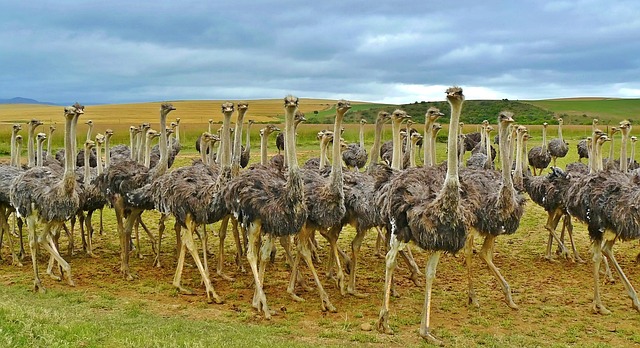
Not every bird can fly, and some of the most remarkable species have given up flight entirely. Here is a look at the best known flightless birds and why they evolved that way.
Big running birds
The largest flightless birds are built for running rather than flying. The ostrich is the biggest bird alive, reaching up to 2.7 metres tall and sprinting at around 70 kilometres per hour. Emus and rheas are smaller relatives from Australia and South America. The cassowary, found in New Guinea and northern Australia, is a powerful forest bird with a bony crest. These birds have strong legs and heavy bodies, and their wings are small. See our types of birds guide.
Swimmers and small flightless birds
Not all flightless birds are giants. Penguins traded flying for swimming, using their flipper-like wings to shoot through the water in search of fish. The kiwi of New Zealand is a small, nocturnal, chicken-sized bird with tiny hidden wings and a long probing beak. Because New Zealand had no native land predators for millions of years, several of its birds lost flight. You can read more about swimming birds in our water birds guide.
Why some birds cannot fly
Flight uses a great deal of energy and requires large muscles and light bones. When a bird lives somewhere with plenty of food and few predators, the ability to fly can become unnecessary, and over many generations it may be lost. Some birds instead grew larger and faster on the ground, while others became strong swimmers. Sadly, flightlessness also made many island birds easy targets once humans and introduced predators arrived.