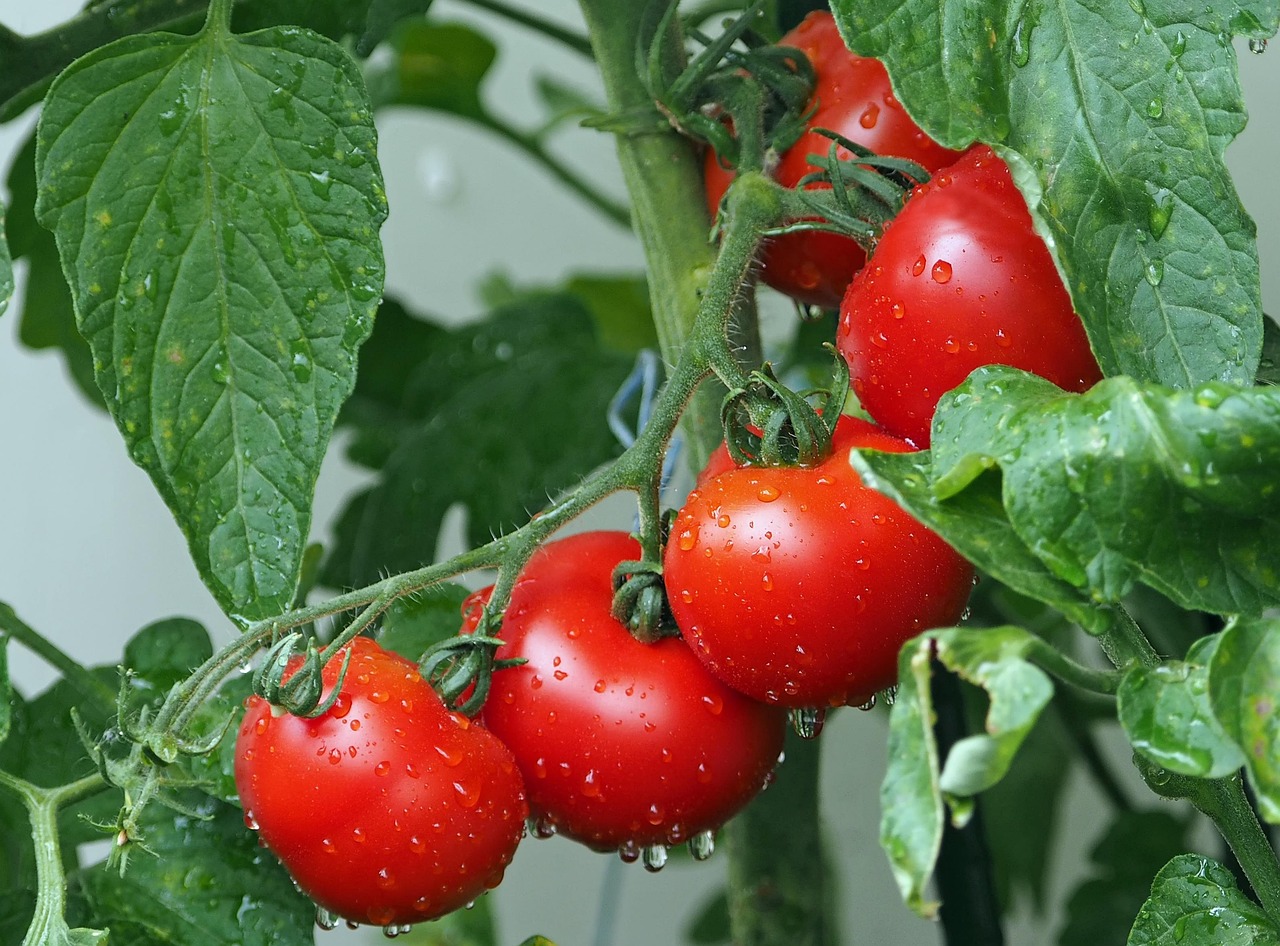
Tomatoes are a treat with an important line drawn through the middle of them. The ripe red fruit is a favourite, but the green parts of the plant are genuinely unsafe. Here is exactly what is fine and what to avoid.
Can chickens eat tomatoes?
Ripe red tomatoes — yes. The soft, fully ripened fruit is a safe and popular treat, rich in vitamins and loved by most flocks. The important qualifier is ripe and red. Tomatoes belong to the nightshade family, and the green parts of the plant contain natural compounds that are toxic to chickens. So while a bowl of ripe tomatoes is a lovely thing to share, the plant they grow on is not. As with all treats, ripe tomatoes should stay at around a tenth of the diet, with a complete layer feed making up the rest, as explained in our guide to a balanced chicken diet. There is more on safe foraging in our backyard chicken guides.
The crucial warning: green parts are toxic
This is the one part to take seriously. Green, unripe tomatoes, along with the leaves, stems and vines of the tomato plant, contain solanine and tomatine — the same family of nightshade compounds that make green potatoes unsafe. These should never be fed to chickens. If you grow tomatoes in the garden, keep your flock away from the plants themselves, and never toss trimmings, pruned leaves or unripe fruit into the run. Only the fully ripe red fruit is safe. When a tomato has ripened properly the levels of these compounds in the fruit drop to a harmless amount, which is why ripe ones are fine and green ones are not.
This is also why you should never be tempted to feed the trimmings when you prune your tomato plants, however green and leafy they look. The same goes for the little suckers you pinch out and any tomatoes that have fallen while still hard and green. If in doubt, the rule is easy to remember: red and soft is fine, green and firm is not.
How to feed ripe tomatoes to your chickens
Feeding ripe tomatoes is easy once you have set aside anything green. Choose fully red, soft fruit and share it in modest amounts.
- Use only fully ripe, red tomatoes — discard any green or under-ripe ones.
- Chop larger tomatoes so the flock can share them easily.
- Remove any attached leaves, stems or green shoulders.
- Wash shop-bought tomatoes to remove pesticide residue.
- Keep grit available and clear away leftovers before they spoil.
Growing tomatoes near your flock
Plenty of keepers grow tomatoes and keep chickens side by side, and there is no problem doing so as long as the birds cannot reach the plants. A bit of fencing or a raised bed usually does the trick. The reward is a steady supply of ripe fruit, and windfalls or split tomatoes you would not use yourself make a perfect treat. Cherry tomatoes are just as safe as larger varieties, though it is worth halving them for the same choking reasons that apply to grapes. Just keep that firm line in mind: ripe red fruit for the hens, everything green for the compost heap. If you ever suspect a bird has eaten green plant material and seems unwell, contact a vet.