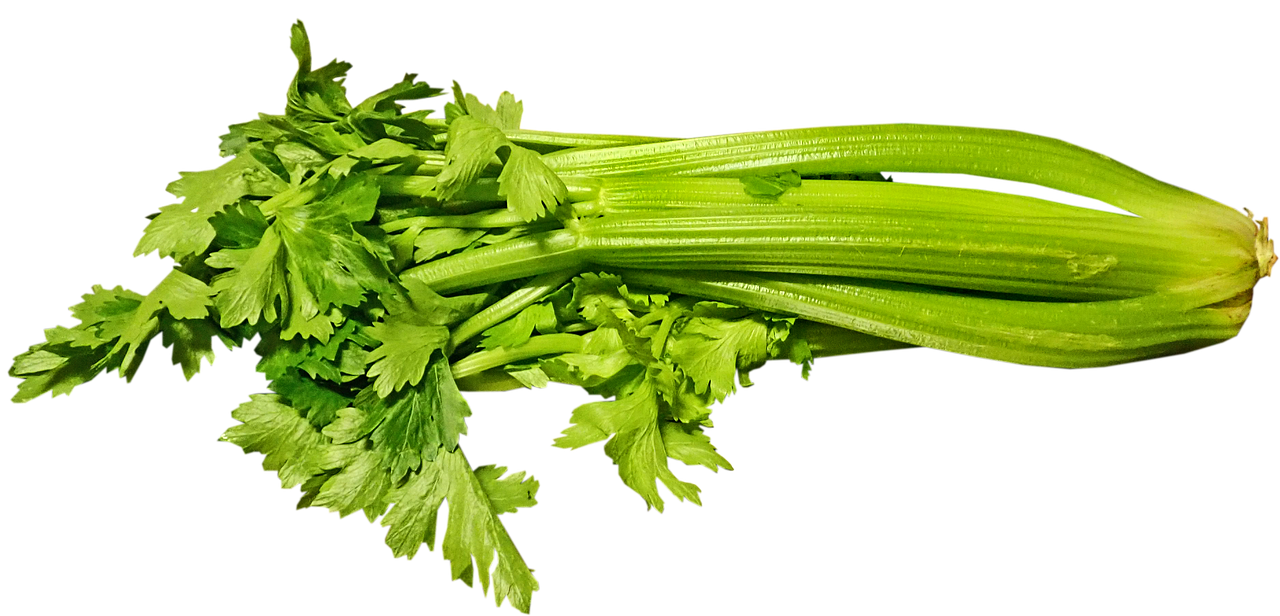
Celery is a hydrating, low-calorie treat that chickens are happy to eat — but its stringy fibres mean a little preparation goes a long way. Here is how to serve it so your flock can enjoy it safely.
Can chickens eat celery?
Yes. Celery is safe for chickens, and both the crunchy stalks and the leafy tops are fine to feed. It is mostly water and very low in calories, which makes it a light, refreshing treat, particularly welcome on a warm day. There is one quirk to work around, though: celery is full of long, tough, stringy fibres that run the length of each stalk, and these can be awkward for a hen to swallow if the celery is fed in big pieces. The fix is simple, and we will come to it. As with all extras, celery should stay within the guideline of treats making up around a tenth of the diet, with a complete layer feed doing the rest — see our guide to a balanced chicken diet.
Why you must chop celery small
Those stringy fibres are the whole reason celery needs preparation. A chicken swallowing a long, stringy strip can struggle with it, and in the worst case a wad of tough fibres is harder to pass through the digestive system than softer food. Chopping celery into short pieces — a centimetre or so — cuts those long strings into manageable lengths, so your birds get all the crunch and hydration with none of the awkwardness. It takes only a moment with a knife and makes celery a genuinely easy treat rather than a fiddly one. The leaves, which are softer, do not need the same care and can go in as they are, and they are actually among the more nutritious parts of the plant, so there is no reason to throw them away. If you have the patience, running a peeler or knife down the outside of a stalk lifts off the toughest strings altogether, though for most flocks simply chopping small does the job perfectly well.
How to feed celery to your chickens
A little prep is all it takes to make celery flock-friendly.
- Chop the stalks into short pieces, around a centimetre long, to break up the fibres.
- Feed the leaves too — they are safe and softer than the stalks.
- Wash the celery to remove any pesticide residue.
- Offer it in moderation as a hydrating, low-calorie treat.
- Keep grit available so your birds can grind down the fibrous pieces.
A light, hydrating extra
Because celery is so low in calories and high in water, it is one of the more waistline-friendly treats you can offer, and it sits nicely in a summer rotation with other watery favourites such as cucumbers. Just remember it is a treat rather than a food group in its own right — celery does not carry the protein and calcium your laying hens need, so it should never crowd out their proper feed. Chop it, share it, clear away the leftovers, and it makes a lovely, refreshing addition to their day. The leftover base and offcuts from a bunch you have used in the kitchen are ideal for the flock, which makes celery a thrifty little treat as well as a healthy one, provided it is chopped small and served plain.